
The Essential Guide to C&I Energy Storage for Cost Reduction
Welcome t
Introduction
As the global energy transition accelerates and time-of-use electricity pricing policies are fully implemented, reducing energy costs has become a core challenge for enterprise managers. Commercial and Industrial Energy Storage (C&I ESS), as a highly cost-effective emerging technology, is rapidly becoming a powerful tool for energy savings, emission reduction, and electricity cost-cutting through its core ability of “peak-valley arbitrage”.
01. What is Time-of-Use Pricing and Peak-Valley Arbitrage?
Time-of-use pricing refers to the grid company setting different electricity rates at different times of the day. Typically, electricity is cheaper during the night off-peak hours, and expensive during the daytime peak hours.
Peak-valley arbitrage utilizes the C&I energy storage system to charge the batteries during the low-cost off-peak hours, and then discharge this stored power for enterprise production during the high-cost peak hours. Through this “buy low, sell high” time-shift strategy, enterprises can effectively save on electricity bills.
02. How Does a C&I ESS Achieve Arbitrage?
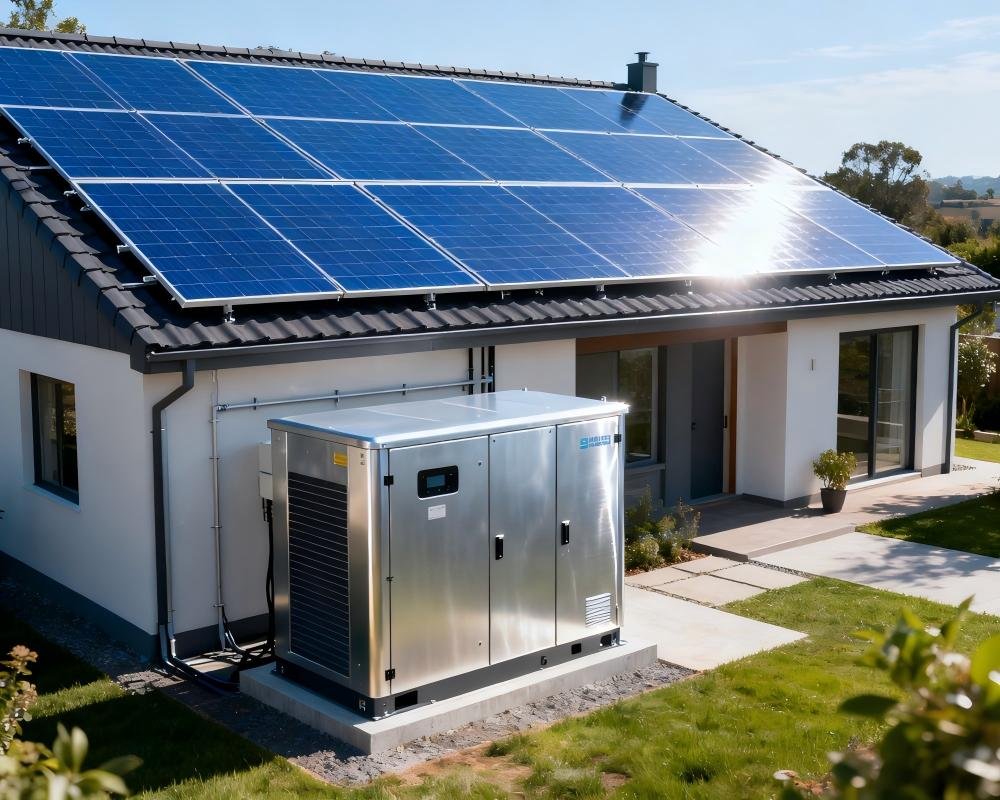
A complete C&I ESS typically consists of battery modules, a Battery Management System (BMS), an Energy Management System (EMS), and a Power Conversion System (PCS). Every night or early morning, the EMS senses the off-peak period, instructs the PCS to convert grid AC power into DC power to charge the battery packs. During peak daytime hours when electricity costs are highest, the system seamlessly switches and inverts the DC power back into AC power for factory equipment use.
Furthermore, advanced EMS features AI smart learning capabilities. Based on local real-time electricity price fluctuations, weather changes, and historical energy consumption patterns, it automatically plans optimal daily charge and discharge schedules to maximize arbitrage profits.
03. Beyond Cost Savings: What Other Values Does It Bring?
- No Basic Capacity Charge Increase: The storage cabinet only shifts energy in time, without increasing the transformer capacity, saving on basic electricity charges.
- Uninterrupted Power Supply: During sudden power outages or grid instability, the C&I ESS acts as emergency backup power. It switches to off-grid mode in milliseconds, ensuring critical loads such as precision equipment, production lines, and servers stay powered, preventing huge losses caused by production stoppages.
- Achieving Dual Carbon Goals: Utilizing green and clean energy effectively reduces the enterprise’s carbon footprint, meets the green supply chain requirements of overseas clients and policies, and enhances the company’s ESG branding.
04. How Should Enterprises Choose the Right C&I ESS?
When making a purchase, we recommend focusing on three core indicators:
- System Safety: Choose systems with an IP65 protection rating (waterproof and dustproof), smart thermal management, and multi-layer fire warning systems to ensure long-term stable operation in complex factory environments.
- Modular Design: Standardized “building-block” cabinets support parallel expansion. Enterprises can configure based on current energy needs and flexibly expand capacity later, optimizing capital utilization.
- Smart Interaction: A visualized mobile and PC monitoring platform allows managers to check system status, revenue data, and battery health anytime, anywhere.
Conclusion
Driven by both electricity pricing reforms and green energy transitions, C&I energy storage is no longer an “option” but a “must-have” for achieving cost reduction and efficiency improvement. For forward-looking manufacturing plants, large shopping malls, and data centers, investing in a high-quality C&I energy storage system is a wise move to participate in the construction of a new power system and secure future energy advantages.o WordPress. This is your first post. Edit or delete it, then start writing!